



About This Event
Take advantage of this one-day in person event featuring a celebration of new Canadian CAS members! This is your chance to take part in continuing education, connect, collaborate, and be inspired alongside peers and thought leaders from across Canada.
Explore timely issues shaping Canada’s property and casualty insurance landscape, including practical applications and responsible governance of AI, climate modeling, Alberta’s Care-First reform, and leadership journeys across the profession.
For more information on the schedule and sessions at this event, see the bottom of this page.
Vogue Hotel Montreal Downtown, Curio Collection by Hilton
1425 Rue De la Montagne
Montreal, Quebec H3G1Z3
Canada
The Vogue Hotel Montreal Downtown, Curio Collection by Hilton, is nestled amongst the popular boutiques and world-renowned museums and galleries in the heart of Montreal's Golden Square Mile, the city's fashionable culture hub.
The hotel is near the Montreal Central Station (1.4 km) and Peel station (.35 km) on the Montreal Metro. Montreal-Trudeau International Airport (YUL) is 17 km from the hotel and is serviced by taxis, rideshares and the 747 Express Bus. Visit Vogue hotel’s transportation page for more information.
Hotel Reservations
Vogue Hotel Montreal Downtown, Curio Collection by Hilton
1425 Rue De la Montagne
Montreal, Quebec H3G1Z3
Canada
The Vogue Hotel Montreal Downtown is offering a limited number of guest rooms for attendees of the 2026 CAS Canada Connection at a discounted rate of CAD $295 per night, plus taxes, for single or double occupancy.
To reserve a room, please email meetings@casact.org with the guest’s full legal name and arrival/departure dates. Reservations must be requested by Monday, November 2, 2026, and may only be made by the event organizers.
Please note that rooms are limited, and availability is not guaranteed through the reservation deadline. CAS encourages attendees to request hotel accommodations early before the room block fills.
Continuing Education Credits
The CAS Continuing Education Policy applies to all ACAS and FCAS members who provide actuarial services. Actuarial services are defined in the CAS Code of Professional Conduct as “professional services provided to a Principal by an individual acting in the capacity of an actuary. Such services include the rendering of advice, recommendations, findings or opinions based upon actuarial considerations.”
Members who are or could be subject to the continuing education requirements of a national actuarial organization can meet the requirements of the CAS Continuing Education Policy by satisfying the continuing education requirements established by a national actuarial organization recognized by the Policy.
This event may qualify for up to 5.4 CE credits for CAS members. Participants should claim credit commensurate with the extent of their participation in the activity. CAS members earn 1 CE credit per 50 minutes of educational session time, not to include breaks or lunch.
**Note: The amount of CE credit that can be earned for participating in this activity must be assessed by the individual attendee. It also may be different for individuals who are subject to the requirements of organizations other than the American Academy of Actuaries.
Accessibility
The CAS seeks to do its utmost to provide equal access to participants with disabilities. You can submit your accommodation requests upon registration, and we will work with you to meet your needs. Please refer to our Accessibility page for more information.
Speaker Opinions
The opinions expressed by speakers at this event are their own and do not necessarily reflect the opinions of the CAS.
Contact Information
- For more information on event content, please contact Josie Harler at jharler@casact.org.
- For more information on attendee registration, please email arc@casact.org.
- For more information on other CAS opportunities or administrative policies such as complaints and refunds, please contact the CAS Office at (703) 276-3100 or visit the CAS website.
- For more information on the seminar other than registration or content issues, please email meetings@casact.org.
New Member Recognition
The CAS is excited to celebrate our newest members at the 2026 CAS Canada Connection!
Members who achieved their ACAS or FCAS designation in 2025 or 2026 — including those anticipated to join the Spring 2027 class after passing the Fall 2026 exam sitting — are warmly invited to be recognized during the Welcome & Celebration of Canadian New Members session on December 3, 2026.
We understand that some company policies may limit international travel and wanted to provide an additional opportunity for recognition closer to home. Even if you were previously recognized at a CAS Spring or Annual Meeting, we would be delighted to celebrate your achievement again at this Canadian event.
New members are welcome to attend either the full CAS Canada Connection meeting or only the Welcome & Celebration of Canadian New Members session. Those attending only the celebration session do not need to complete the event registration process; however, all individuals who wish to be formally recognized during the session must complete the separate New Member Recognition at the 2026 CAS Canada Connection RSVP form.
RSVP Required for Recognition: To be individually recognized during the celebration, new members must complete the New Member Recognition at 2026 CAS Canada Connection Form. This form will close on Friday, November 20.
Questions about the new member recognition can be directed to Shelby Wolff, Membership and Volunteer Engagement Manager at swolff@casact.org.
The 2026 Canada Connection registration fee includes educational sessions, lunch, refreshment breaks, and a closing reception on Thursday. Registration must be received by December 2 at 11:59 PM (ET).
REGISTRATION FEES
|
|
REGISTRATION FEE BY OCT 23 |
LATE FEE AFTER OCT 23 |
|
Individual |
CAD $400 / US $290 |
CAD $539 / US $390 |
* Fees will be charged in U.S. Dollars, and Canadian fees are approximated but will be subject to currency exchange rates at time of registration.
Registration fees will be refunded for cancellations received by November 20, 2026, less a $100 processing fee.
To cancel your 2026 CAS Canada Connection registration, simply log into your CAS Portal and follow the steps below:
1. Go to My Meetings.
2. Click on Details.
3. Under Registration Details, select EDIT.
4. Choose Cancel Registration.
Your registration fees (minus the $100 cancellation fee) will be refunded within 10 business days.
You may process your cancellation via the CAS Portal by November 20, 2026. If you need to correspond with the CAS regarding your event cancellation, please email meetings@casact.org.
If the CAS Canada Connection is canceled, registrants receive a full refund for registration fees paid. Transportation and hotel costs or fees are the responsibility of the attendee and are therefore not reimbursable by the CAS.
The CAS is excited to celebrate our newest members at the 2026 CAS Canada Connection!
Members who achieved their ACAS or FCAS designation in 2025 or 2026 — including those anticipated to join the Spring 2027 class after passing the Fall 2026 exam sitting — are warmly invited to be recognized during the Welcome & Celebration of Canadian New Members session on December 3, 2026.
We understand that some company policies may limit international travel and wanted to provide an additional opportunity for recognition closer to home. Even if you were previously recognized at a CAS Spring or Annual Meeting, we would be delighted to celebrate your achievement again at this Canadian event.
New members are welcome to attend either the full CAS Canada Connection meeting or only the Welcome & Celebration of Canadian New Members session. Those attending only the celebration session do not need to complete the event registration process; however, all individuals who wish to be formally recognized during the session must complete the separate New Member Recognition at the 2026 CAS Canada Connection RSVP form.
RSVP Required for Recognition: To be individually recognized during the celebration, new members must complete the New Member Recognition at 2026 CAS Canada Connection Form. This form will close on Friday, November 20.
Questions about the new member recognition can be directed to Shelby Wolff, Membership and Volunteer Engagement Manager at swolff@casact.org.

Welcome, Celebration of Canadian New Members
Join us for a celebration of new Canadian CAS members!
Artificial Intelligence in Pricing
We will describe the different steps in the traditional pricing paradigm (analyze/monitor, decide, deploy), how AI can be practically used in each step, and its likely future impact. We will then give an overview of a conversation with Co-pilot about purchasing insurance, and discuss consequences for distribution and related areas.
Learning Objectives:
- Explain the steps in the traditional pricing paradigm and how AI can be used practically in each step
- Explain the likely future impact of AI on pricing work
- Be aware of the consequences of AI on distribution and related areas
Speakers:
Benjamin Williams

Ben is a Senior Director at WTW. He specializes in predictive analytics and applications to pricing, underwriting, and claims, and has more than 20 years experience in the P&C insurance industry. As well as WTW, he has worked in his native New Zealand, for multinational insurers in Europe and for a US commercial lines insurer, where he led the analytics team. Ben has masters degrees in Mathematics from the Instituto Politecnico Nacional in Mexico and in Physics from the University of Canterbury in New Zealand.
Jean-Francois Tremblay

Jean François joined WTW in June 2024 and is a Senior Director in the Insurance Consulting and Technology business. He brings more than 25 years of experience in the insurance industry, with a career centered on leveraging data, analytics, and technology to drive optimization, sophistication, and innovation—particularly in Pricing and Underwriting. He holds a degree in Actuarial Sciences from Laval University and is a Fellow of both the Casualty Actuarial Society (FCAS) and the Canadian Institute of Actuaries (FCIA).
Emerging Climate Risks in Canada
Canada's recent catastrophe record has P&C actuaries asking how far historical loss experience can guide pricing, reserving and capital as climate patterns shift. This session looks at how key Canadian perils are changing and how confident the science is for each. It then uses wildfire as a worked example, covering property exposure and liability. It also compares the modelling approaches available today, from catastrophe models to climate-adjusted views and climate model projections, including what each can and can't tell you. The session closes with how the tools apply to major Canadian infrastructure projects and what this means for pricing, risk transfer and capital decisions.
Learning objectives
- Describe how climate change is expected to affect key Canadian perils, and how confident the science is for each.
- Compare catastrophe models, climate-adjusted catastrophe models and climate model projections, including the limits of each.
- Explain how wildfire hazard and loss analytics are built, and how they can apply to both property and liability exposures.
- Apply forward-looking climate and natural hazard analytics to asset-level and project-level exposures to inform pricing, risk transfer and capital decisions.
Speakers:
Dave Bigelow

Dave Bigelow is a Vice President within Aon’s Climate Risk Advisory. He has worked with world-leading data and engineering firms, helping organizations understand their exposure by modelling future impacts to assets and operations. His work has been applied across sectors from power, mining and finance, to communities, buildings and the environment. He has also developed multiple innovative products, leveraging engineering expertise to operationalize climate analytics.
Turn the Page: from Tort to Care-based Reserving in Auto Insurance
What happens when a province fundamentally changes the way injured claimants are compensated? How should actuaries approach reserving when historical experience is no longer an adequate guide?
This session brings together perspectives from two Canadian insurers navigating long-duration injury claims in care-based environments. Khurram Masud from MPI will discuss how reserving for rehabilitation and income replacement benefits differs from traditional auto liability claims, highlighting the importance of claim duration and termination rates as key drivers of reserves when the largest claims can pay out over decades. Andrew Loach from ICBC will provide a case study on the transition from a tort-based system to Enhanced Care in British Columbia, discussing anticipated and unanticipated changes in claimant behaviour, reserving challenges and lessons learned during the first five years after implementation.
Attendees will gain practical insights into long-tail reserving methods, experience monitoring, and managing uncertainty during periods of significant system change.
Learning Objectives:
- Understand the application of long-term reserving methods to auto injury claims.
- Identify key elements of change to a care-based system.
- Communicate on key sources of reserve uncertainty during insurance system reform.
Speakers:
Khurram Masud

Khurram Masud is Director, Valuation & Capital Management at Manitoba Public Insurance. He has almost 25 years of actuarial experience across property & casualty, life and health insurance in Canada, the Middle East, and South Asia. His areas of expertise include reserving, pricing, capital management, IFRS 17, risk management, and reinsurance.
Prior to joining MPI, he held actuarial leadership roles with consulting, insurance, and reinsurance organizations, supporting a broad range of valuation, pricing, capital, and regulatory initiatives. He is a Fellow of the Institute and Faculty of Actuaries, the Society of Actuaries, and the Canadian Institute of Actuaries.
Andrew Loach

Andrew Loach, FCAS, FCIA, is the Corporate Actuary for the Insurance Corporation of British Columbia, with responsibility for establishing reserves for injury claims under both tort-based and care-based systems. He has over 20 years of experience in ratemaking and reserving for auto insurance.
Pricing the Shift : Alberta's move from BI to Accident Benefits Under Care-First
On January 1, 2027, Alberta will transition from a tort-based Bodily Injury (BI) system to a no-fault Accident Benefits (AB) model under the Care-First reform. For pricing teams, this is a complete reset: decades of BI loss history become largely irrelevant, requiring new AB coverages to be priced from scratch without Alberta-specific data. This ground-up exercise necessitates a shift in methodology. While carriers can benchmark against other no-fault provinces, differences in benefit design mean these references cannot be copied directly. A credibility-based approach, such as Lasso Credibility, is essential to blend external priors and expert judgment with emerging data. Success will require a faster pricing cadence than the industry standard; carriers must move away from annual reviews toward real-time portfolio monitoring to detect early signals in utilization and segment divergence before they impact the bottom line.
Learning Objectives:
- Understand the structural shift from tort-based BI to no-fault AB pricing.
- Apply credibility-based approaches to blend external benchmarks with emerging data.
- Design a portfolio monitoring strategy adapted to a high-uncertainty environment.
Speakers:
Kamela Taleb

Kamela Taleb joined Akur8 as an Actuarial Data Scientist in 2025. Over the past nine years, Kamela has held actuarial and pricing roles across a wide range of business lines, including commercial, cyber, natural catastrophe, auto, and construction. At AXA, one of France’s leading insurers, she experienced firsthand Akur8’s strong added value. There, she contributed to developing a new auto pricing structure and strategy using advanced modeling techniques such as GLMs and GBMs, driving greater pricing sophistication and optimization.
Model Risk Management in the Age of Generative AI: One P&C Insurer’s Approach
The increasing availability of AI-based technology introduces new opportunities and new risks for P&C insurers, creating the need to balance the two through a commitment to responsible use of AI. The risks associated with use of AI within a financial institution have been recognized through regulation, including OSFI’s Model Risk Management Guideline (E-23). This presentation will highlight core aspects of Definity’s approach to managing AI model risk, and discuss what it takes, from a practical, hands-on perspective, to put regulatory guidelines into practice and enable effective use of AI. Concrete examples of AI applications, supporting functions such as customer service and claims intake, will illustrate how we assess a model’s suitability for its business purpose. Actuaries have played an essential role as members of cross-functional teams working on AI initiatives and governance, and the presentation will describe how actuarial perspectives have added value to these efforts.
Learning Objectives:
- Propose model risk mitigation approaches that align with the risk level of a Generative AI use case.
- Identify Standards of Practice that are relevant for an actuary making recommendations related to use of an AI model.
- Propose metrics to evaluate an AI model’s suitability for a business use case.
Speakers:
Craig Sloss

Craig Sloss (he / him) is an Enterprise Analytics Consultant at Definity Financial Corporation, where he has been a member of the Advanced Analytics team since 2014. Craig’s role involves providing technical guidance on model development, validation, and governance to data scientists and actuaries who work on predictive models supporting fraud detection, claims management, underwriting operations, and customer service interactions. He has been a major contributor to Definity’s policies and practices around responsible use of AI, at both the first and second lines of defense, and has played a leading role in Definity’s efforts to operationalize bias and fairness testing for predictive models. Craig actively supports initiatives to advance the actuarial profession, in roles such as Volunteer Chair of the CAS Canada Race and Insurance Pricing Task Force, and as Vice Chair of the CIA Property & Casualty Practice Committee.
Expanding Your Influence: A Conversation with Industry Leaders
What does it take to turn actuarial expertise into lasting influence? Join CAS members who are industry leaders for a candid discussion about career growth, leadership, and the opportunities ahead for CAS members in Canada and beyond.
Panelists will share lessons from career progression and professional development the led them to where they are today. Leave with practical ideas to build your professional and leadership skills and make a greater impact in your career.
Learning Objectives:
- Explore ways to build professional and leadership skills.
- Identify tools and strategies to support career growth and advancement.
Speakers:
Barry Franklin
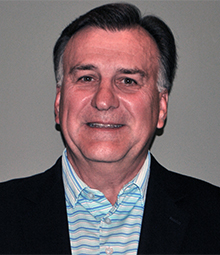
Barry Franklin is a risk management and insurance executive with more than 40 years of experience in a variety of actuarial and risk management leadership roles. He founded Upstate Actuarial LLC, a boutique risk management and actuarial consulting firm, after retiring as Chief Actuary for Zurich North America.
Barry is a Fellow of the Casualty Actuarial Society, a Chartered Enterprise Risk Analyst, and a Member of the American Academy of Actuaries. He has been active in actuarial profession leadership, having served on the CAS Board of Directors and Executive Council, as well as numerous CAS committees and task forces. In November, Barry will conclude his term as CAS President and begin his term as Chairperson of the CAS Board of Directors. Barry holds a Bachelor of Science degree from Northern Illinois University, with a major in Probability and Statistics and a minor in Economics.
Erika Schurr
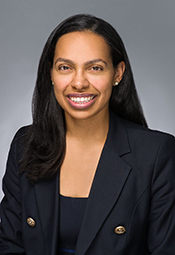
Jonathan Frost

Jonathan Frost is the Senior Vice President and Chief Underwriting Officer of Munich Reinsurance Company of Canada (MROC). In this role, Jonathan is part of the MROC Senior Leadership Team, providing underwriting strategy to the group and overseeing the operation of all underwriting departments. Previous to this role, Jonathan was the Vice President of Property Treaty Underwriting responsible for the execution of the strategic direction of the portfolio with expertise in technical pricing, modelling and underwriting.
Jonathan has over 20 years of experience in the insurance and (re-) insurance industry holding previous roles at Guy Carpenter as the Head of Analytics in Canada and Royal and SunAlliance in the actuarial pricing and valuation teams.
Jonathan is Fellow of the Casualty Actuarial Society and the Canadian Institute of Actuaries.
All times are listed in EASTERN time. Session information coming soon!
| Time | Event |
|
Thursday, December 3, 2026 |
|
|
8:30AM - 5:00PM |
Registration |
|
9:30AM - 10:00AM |
Welcome, Celebration of Canadian New Members |
|
10:00AM - 10:30AM |
Networking & Refreshment Break |
|
10:30AM - 11:15AM |
Artificial Intelligence in Pricing |
|
11:15AM - 12:00PM |
Emerging Climate Risks in Canada |
|
12:00PM - 1:30PM |
Lunch |
|
1:30PM - 2:15PM |
Turn the Page: From Tort to Care-based Reserving in Auto Insurance |
|
2:15PM - 3:00PM |
Pricing the Shift : Alberta's Move from BI to Accident Benefits Under Care-First |
|
3:00PM - 3:30PM |
Networking & Refreshment Break |
|
3:30PM - 4:15PM |
Model Risk Management in the Age of Generative AI: One P&C Insurer’s Approach |
|
4:15PM - 5:00PM |
Expanding Your Influence: A Conversation with Industry Leaders |
|
5:00PM - 5:15PM |
Closing and Transition |
|
5:15PM - 6:30PM |
Reception |
Welcome, Celebration of Canadian New Members
Join us for a celebration of new Canadian CAS members!
Artificial Intelligence in Pricing
We will describe the different steps in the traditional pricing paradigm (analyze/monitor, decide, deploy), how AI can be practically used in each step, and its likely future impact. We will then give an overview of a conversation with Co-pilot about purchasing insurance, and discuss consequences for distribution and related areas.
Learning Objectives:
- Explain the steps in the traditional pricing paradigm and how AI can be used practically in each step
- Explain the likely future impact of AI on pricing work
- Be aware of the consequences of AI on distribution and related areas
Speakers:
Benjamin Williams
Ben is a Senior Director at WTW. He specializes in predictive analytics and applications to pricing, underwriting, and claims, and has more than 20 years experience in the P&C insurance industry. As well as WTW, he has worked in his native New Zealand, for multinational insurers in Europe and for a US commercial lines insurer, where he led the analytics team. Ben has masters degrees in Mathematics from the Instituto Politecnico Nacional in Mexico and in Physics from the University of Canterbury in New Zealand.
Jean-Francois Tremblay
Jean François joined WTW in June 2024 and is a Senior Director in the Insurance Consulting and Technology business. He brings more than 25 years of experience in the insurance industry, with a career centered on leveraging data, analytics, and technology to drive optimization, sophistication, and innovation—particularly in Pricing and Underwriting. He holds a degree in Actuarial Sciences from Laval University and is a Fellow of both the Casualty Actuarial Society (FCAS) and the Canadian Institute of Actuaries (FCIA).
Emerging Climate Risks in Canada
Canada's recent catastrophe record has P&C actuaries asking how far historical loss experience can guide pricing, reserving and capital as climate patterns shift. This session looks at how key Canadian perils are changing and how confident the science is for each. It then uses wildfire as a worked example, covering property exposure and liability. It also compares the modelling approaches available today, from catastrophe models to climate-adjusted views and climate model projections, including what each can and can't tell you. The session closes with how the tools apply to major Canadian infrastructure projects and what this means for pricing, risk transfer and capital decisions.
Learning objectives
- Describe how climate change is expected to affect key Canadian perils, and how confident the science is for each.
- Compare catastrophe models, climate-adjusted catastrophe models and climate model projections, including the limits of each.
- Explain how wildfire hazard and loss analytics are built, and how they can apply to both property and liability exposures.
- Apply forward-looking climate and natural hazard analytics to asset-level and project-level exposures to inform pricing, risk transfer and capital decisions.
Speakers:
Dave Bigelow
Dave Bigelow is a Vice President within Aon’s Climate Risk Advisory. He has worked with world-leading data and engineering firms, helping organizations understand their exposure by modelling future impacts to assets and operations. His work has been applied across sectors from power, mining and finance, to communities, buildings and the environment. He has also developed multiple innovative products, leveraging engineering expertise to operationalize climate analytics.
Turn the Page: from Tort to Care-based Reserving in Auto Insurance
What happens when a province fundamentally changes the way injured claimants are compensated? How should actuaries approach reserving when historical experience is no longer an adequate guide?
This session brings together perspectives from two Canadian insurers navigating long-duration injury claims in care-based environments. Khurram Masud from MPI will discuss how reserving for rehabilitation and income replacement benefits differs from traditional auto liability claims, highlighting the importance of claim duration and termination rates as key drivers of reserves when the largest claims can pay out over decades. Andrew Loach from ICBC will provide a case study on the transition from a tort-based system to Enhanced Care in British Columbia, discussing anticipated and unanticipated changes in claimant behaviour, reserving challenges and lessons learned during the first five years after implementation.
Attendees will gain practical insights into long-tail reserving methods, experience monitoring, and managing uncertainty during periods of significant system change.
Learning Objectives:
- Understand the application of long-term reserving methods to auto injury claims.
- Identify key elements of change to a care-based system.
- Communicate on key sources of reserve uncertainty during insurance system reform.
Speakers:
Khurram Masud
Khurram Masud is Director, Valuation & Capital Management at Manitoba Public Insurance. He has almost 25 years of actuarial experience across property & casualty, life and health insurance in Canada, the Middle East, and South Asia. His areas of expertise include reserving, pricing, capital management, IFRS 17, risk management, and reinsurance.
Prior to joining MPI, he held actuarial leadership roles with consulting, insurance, and reinsurance organizations, supporting a broad range of valuation, pricing, capital, and regulatory initiatives. He is a Fellow of the Institute and Faculty of Actuaries, the Society of Actuaries, and the Canadian Institute of Actuaries.
Andrew Loach
Andrew Loach, FCAS, FCIA, is the Corporate Actuary for the Insurance Corporation of British Columbia, with responsibility for establishing reserves for injury claims under both tort-based and care-based systems. He has over 20 years of experience in ratemaking and reserving for auto insurance.
Pricing the Shift : Alberta's move from BI to Accident Benefits Under Care-First
On January 1, 2027, Alberta will transition from a tort-based Bodily Injury (BI) system to a no-fault Accident Benefits (AB) model under the Care-First reform. For pricing teams, this is a complete reset: decades of BI loss history become largely irrelevant, requiring new AB coverages to be priced from scratch without Alberta-specific data. This ground-up exercise necessitates a shift in methodology. While carriers can benchmark against other no-fault provinces, differences in benefit design mean these references cannot be copied directly. A credibility-based approach, such as Lasso Credibility, is essential to blend external priors and expert judgment with emerging data. Success will require a faster pricing cadence than the industry standard; carriers must move away from annual reviews toward real-time portfolio monitoring to detect early signals in utilization and segment divergence before they impact the bottom line.
Learning Objectives:
- Understand the structural shift from tort-based BI to no-fault AB pricing.
- Apply credibility-based approaches to blend external benchmarks with emerging data.
- Design a portfolio monitoring strategy adapted to a high-uncertainty environment.
Speakers:
Kamela Taleb
Kamela Taleb joined Akur8 as an Actuarial Data Scientist in 2025. Over the past nine years, Kamela has held actuarial and pricing roles across a wide range of business lines, including commercial, cyber, natural catastrophe, auto, and construction. At AXA, one of France’s leading insurers, she experienced firsthand Akur8’s strong added value. There, she contributed to developing a new auto pricing structure and strategy using advanced modeling techniques such as GLMs and GBMs, driving greater pricing sophistication and optimization.
Model Risk Management in the Age of Generative AI: One P&C Insurer’s Approach
The increasing availability of AI-based technology introduces new opportunities and new risks for P&C insurers, creating the need to balance the two through a commitment to responsible use of AI. The risks associated with use of AI within a financial institution have been recognized through regulation, including OSFI’s Model Risk Management Guideline (E-23). This presentation will highlight core aspects of Definity’s approach to managing AI model risk, and discuss what it takes, from a practical, hands-on perspective, to put regulatory guidelines into practice and enable effective use of AI. Concrete examples of AI applications, supporting functions such as customer service and claims intake, will illustrate how we assess a model’s suitability for its business purpose. Actuaries have played an essential role as members of cross-functional teams working on AI initiatives and governance, and the presentation will describe how actuarial perspectives have added value to these efforts.
Learning Objectives:
- Propose model risk mitigation approaches that align with the risk level of a Generative AI use case.
- Identify Standards of Practice that are relevant for an actuary making recommendations related to use of an AI model.
- Propose metrics to evaluate an AI model’s suitability for a business use case.
Speakers:
Craig Sloss
Craig Sloss (he / him) is an Enterprise Analytics Consultant at Definity Financial Corporation, where he has been a member of the Advanced Analytics team since 2014. Craig’s role involves providing technical guidance on model development, validation, and governance to data scientists and actuaries who work on predictive models supporting fraud detection, claims management, underwriting operations, and customer service interactions. He has been a major contributor to Definity’s policies and practices around responsible use of AI, at both the first and second lines of defense, and has played a leading role in Definity’s efforts to operationalize bias and fairness testing for predictive models. Craig actively supports initiatives to advance the actuarial profession, in roles such as Volunteer Chair of the CAS Canada Race and Insurance Pricing Task Force, and as Vice Chair of the CIA Property & Casualty Practice Committee.
Expanding Your Influence: A Conversation with Industry Leaders
What does it take to turn actuarial expertise into lasting influence? Join CAS members who are industry leaders for a candid discussion about career growth, leadership, and the opportunities ahead for CAS members in Canada and beyond.
Panelists will share lessons from career progression and professional development the led them to where they are today. Leave with practical ideas to build your professional and leadership skills and make a greater impact in your career.
Learning Objectives:
- Explore ways to build professional and leadership skills.
- Identify tools and strategies to support career growth and advancement.
Speakers:
Barry Franklin
Barry Franklin is a risk management and insurance executive with more than 40 years of experience in a variety of actuarial and risk management leadership roles. He founded Upstate Actuarial LLC, a boutique risk management and actuarial consulting firm, after retiring as Chief Actuary for Zurich North America.
Barry is a Fellow of the Casualty Actuarial Society, a Chartered Enterprise Risk Analyst, and a Member of the American Academy of Actuaries. He has been active in actuarial profession leadership, having served on the CAS Board of Directors and Executive Council, as well as numerous CAS committees and task forces. In November, Barry will conclude his term as CAS President and begin his term as Chairperson of the CAS Board of Directors. Barry holds a Bachelor of Science degree from Northern Illinois University, with a major in Probability and Statistics and a minor in Economics.
Erika Schurr
Jonathan Frost
Jonathan Frost is the Senior Vice President and Chief Underwriting Officer of Munich Reinsurance Company of Canada (MROC). In this role, Jonathan is part of the MROC Senior Leadership Team, providing underwriting strategy to the group and overseeing the operation of all underwriting departments. Previous to this role, Jonathan was the Vice President of Property Treaty Underwriting responsible for the execution of the strategic direction of the portfolio with expertise in technical pricing, modelling and underwriting.
Jonathan has over 20 years of experience in the insurance and (re-) insurance industry holding previous roles at Guy Carpenter as the Head of Analytics in Canada and Royal and SunAlliance in the actuarial pricing and valuation teams.
Jonathan is Fellow of the Casualty Actuarial Society and the Canadian Institute of Actuaries.
All times are listed in EASTERN time. Session information coming soon!
| Time | Event |
|
Thursday, December 3, 2026 |
|
|
8:30AM - 5:00PM |
Registration |
|
9:30AM - 10:00AM |
Welcome, Celebration of Canadian New Members |
|
10:00AM - 10:30AM |
Networking & Refreshment Break |
|
10:30AM - 11:15AM |
Artificial Intelligence in Pricing |
|
11:15AM - 12:00PM |
Emerging Climate Risks in Canada |
|
12:00PM - 1:30PM |
Lunch |
|
1:30PM - 2:15PM |
Turn the Page: From Tort to Care-based Reserving in Auto Insurance |
|
2:15PM - 3:00PM |
Pricing the Shift : Alberta's Move from BI to Accident Benefits Under Care-First |
|
3:00PM - 3:30PM |
Networking & Refreshment Break |
|
3:30PM - 4:15PM |
Model Risk Management in the Age of Generative AI: One P&C Insurer’s Approach |
|
4:15PM - 5:00PM |
Expanding Your Influence: A Conversation with Industry Leaders |
|
5:00PM - 5:15PM |
Closing and Transition |
|
5:15PM - 6:30PM |
Reception |
